Understanding Person-Centred Support
Person-centred support is a core principle of the NDIS, but many families hear the term without fully understanding what it means in practice.
Simply put, person-centred support focuses on the individual, not the system. Instead of fitting your child into a standard program, the support is designed around their unique needs, preferences, and goals.
This approach recognises that every child is different, and what works for one may not work for another.
How It Works in Real Life
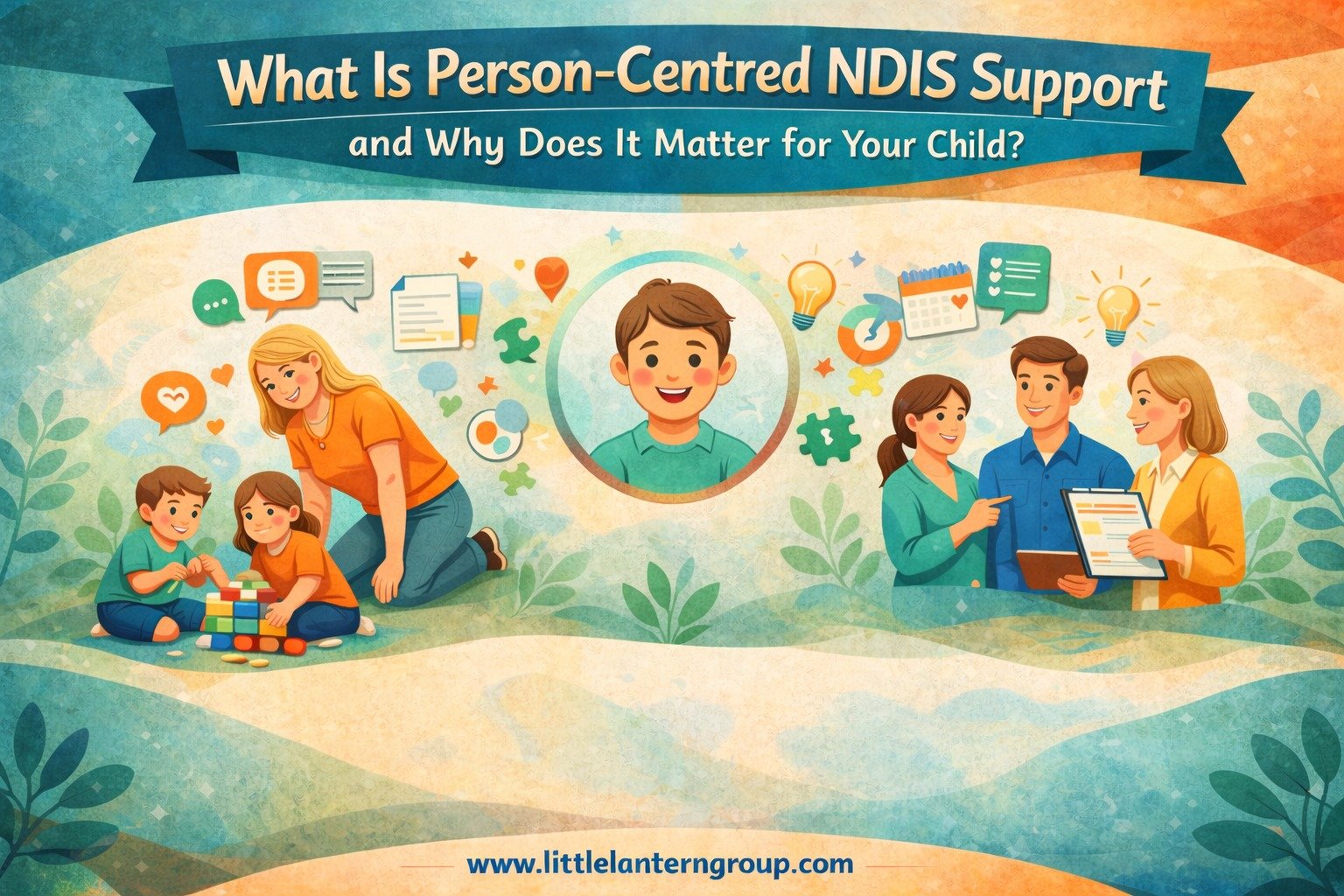
In a person-centred approach, your child is not just receiving services. They are actively involved in shaping how those services are delivered.
This might include:
- Choosing activities they enjoy
- Setting personal goals
- Having input in how support is provided
For younger children, this often involves parents working closely with providers to ensure the child’s needs are understood properly.
Why It Matters for Your Child’s Development
Children respond better when they feel understood and supported in a way that suits them.
When support is personalised:
- Engagement improves
- Confidence increases
- Progress becomes more consistent
A child who feels comfortable is far more likely to participate and benefit from support services.
Moving Away from One-Size-Fits-All Support
Traditional models often followed a fixed structure where everyone received the same type of support.
Person-centred support moves away from this completely.
For example, instead of forcing a child into a standard therapy session, the provider might adjust the environment, timing, or approach to suit the child’s preferences.
This flexibility is what makes the NDIS approach more effective.
The Role of Families in Person-Centred Support
Families play a central role in this model.
You know your child better than anyone else, and your input helps shape the support plan.
Good providers will:
- Listen to your concerns
- Involve you in decisions
- Adjust strategies based on feedback
This collaborative approach leads to better outcomes over time.
Choosing the Right Provider for Person-Centred Care
Not every provider truly delivers person-centred support, even if they claim to.
Look for providers who:
- Ask detailed questions about your child
- Adapt their approach rather than following a script
- Show genuine interest in your child’s progress
You should feel that the support is tailored, not generic.
Long-Term Benefits
Person-centred support doesn’t just help in the short term. It builds long-term skills and independence.
Children learn:
- How to make choices
- How to communicate their needs
- How to build confidence in different situations
These are essential life skills that go beyond any single service.
Final Thoughts
Person-centred NDIS support is about treating your child as an individual, not just a participant in a system.
When done properly, it creates a more positive experience for both the child and the family, and leads to better outcomes over time.